Vascular access for dialysis
Vascular access is the way blood is safely taken from your body, cleaned by a haemodialysis machine, and returned to you during dialysis.
If haemodialysis is likely to be needed, your kidney team will discuss the best type of access for you and plan this in advance where possible.
Types of vascular access
There are three main types of access for haemodialysis:
- AV fistula: This is usually the preferred option. A surgeon joins an artery to a vein, usually in your arm. Over time, the vein becomes stronger and can be used for dialysis needles.
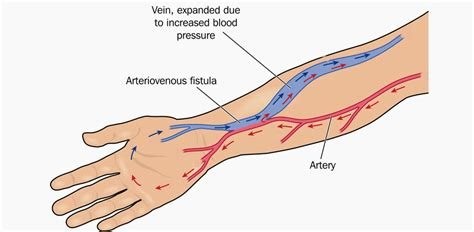
- AV graft: This may be used if your own veins are not suitable for a fistula. A soft artificial tube is used to connect an artery and a vein.
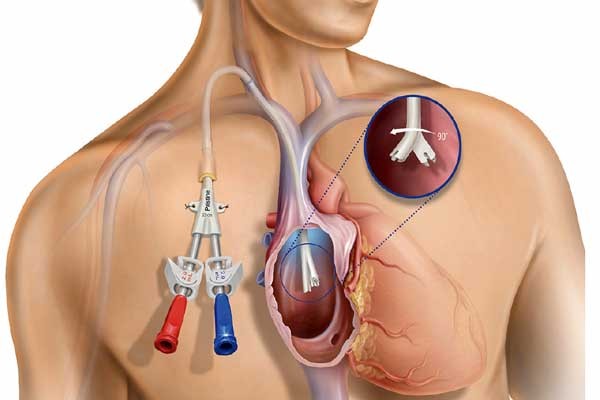
- Dialysis line: A soft tube is placed into a large vein, often in the neck or chest. This can be used quickly, but it has a higher risk of infection and is usually used when a fistula or graft is not ready.
Kidney Care UK is a great resource for further information about renal vascular access.
Referral to the vascular access team
Your kidney doctor will monitor your kidney function at regular clinic appointments. If haemodialysis is likely to be needed, and you choose this option, they will refer you to the Renal Vascular Access Team.
The Renal Vascular Access Team can be contacted Monday to Friday on 01224 551237 or by email at gram.renalvascularaccess@nhs.scot. The team includes specialist staff who help plan and support vascular access for dialysis.
Your vascular access clinic appointment
The team will arrange an appointment for you with a vascular surgeon. This usually takes place in the Vascular Access Clinic in the Pink Zone, Level 5.
At this appointment, the surgeon will look at your veins and arteries using an ultrasound scan. This helps decide the best type of access for you. They will consider factors such as your blood vessels, whether you are left or right-handed, and your general health. You will also receive information and items to help you care for your fistula, such as a stethoscope and squeezy ball.
Once the surgeon has agreed the best option with you, this will be recorded in your notes. The access will only be created when your kidney doctor feels the timing is right.
Planning the right time for surgery
A fistula usually needs about 6 to 8 weeks to grow strong enough for dialysis needles. A graft usually needs about 2 weeks to heal before it can be used. For this reason, we try to create a fistula or graft before dialysis is needed, so it is ready at the right time.
Pre-op assessment and anaesthetic options
When your kidney team thinks dialysis may be needed soon, they will request a pre-op assessment for you. You may be asked to complete an online form called My Preop.
The pre-op team will then decide whether you also need to be seen by a nurse or anaesthetist before surgery.
Many fistula operations can be done using a nerve block, which numbs the whole arm. Sometimes local anaesthetic or general anaesthetic may be used instead. If you have a general anaesthetic, you may be more likely to stay in hospital overnight.
On the day of surgery
On the day of surgery, you will be admitted to the day surgery ward. You will see the vascular surgeon and anaesthetist before your operation. The Vascular Access Team may also visit to answer questions and go through the information in your fistula pack.
After surgery, ward nurses will monitor you and check that your fistula is working. The surgeon may see you before you go home. You will not be able to drive for a few days, so please arrange for someone to take you home.
Looking after your fistula at home
At home, check your fistula every day and look for signs of infection, such as redness, pain, swelling or discharge. If you are worried, contact the Renal Vascular Access Team or your doctor straight away, as you may need treatment. If you have stitches, these may be removed at hospital or by your practice nurse, depending on what is easiest for you.
Follow-up after surgery
The Renal Vascular Access Team will usually phone you a few days after surgery and offer a follow-up appointment around 10 to 14 days later in Clinic G, Purple Zone. This appointment checks that your fistula is healing and developing well.
Once your fistula has healed, you should check it every day. You may be asked to listen with a stethoscope for a “whoosh” sound and feel for a “buzzing” sensation. If either is missing, contact the Renal Vascular Access Team or your doctor, as the fistula may be blocked.
Your kidney doctor will continue to review you in clinic. When dialysis is needed, your fistula or graft should be ready to use.
If dialysis needs to start urgently
Sometimes dialysis needs to start urgently before a fistula or graft is ready. If this happens, a tunnelled dialysis line may be placed in the chest as a temporary option. Once your fistula or graft is working well, the line can usually be removed on Ward 108 as a day procedure.