
Chronic Kidney Disease
What is chronic kidney disease and am I at risk?
Chronic kidney disease (CKD) is a long-term condition where the kidneys work less well than they should. More information can be found in this video:
More information can be found at: About kidney disease | Kidney Care UK
If you are wondering if you are at risk of CKD, Kidney Care UK have developed a checker you can use at: Kidney Health Checker | Kidney Care UK
What are the stages of CKD
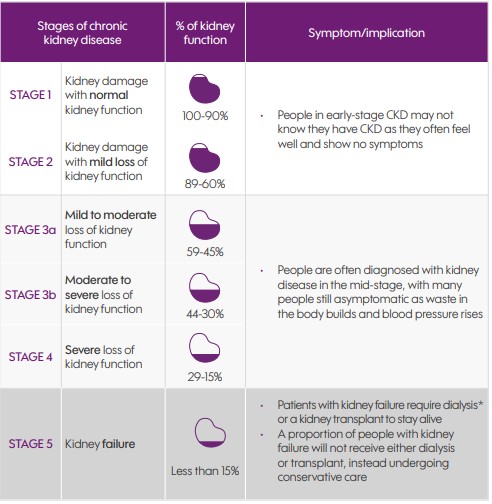
More information on the stages of CKD can be found at: Stages of chronic kidney disease (CKD) | Kidney Care UK
What about CKD in Grampian and Moray?
Not everybody who has CKD will be referred to the kidney department for specialist input. Many patients will be looked after by their local GP practice and are likely recalled once a year for a blood test, urine test and blood pressure check. If your GP practice feels you need more specialist input, then you will be referred to the kidney team at Aberdeen Royal Infirmary. At your first kidney clinic appointment, you can expect to meet the Consultant who will be overseeing your care. You should always bring a sample of urine with you to clinic. The ideal time to collect this sample would be first thing in the morning of the day you come to clinic.
Clinics are generally held in Clinic G at Aberdeen Royal Infirmary (ARI). This is in the purple zone, level 3. There are 2 lifts available. When you arrive, please check in with the reception staff and they will direct you to the waiting room. One of the outpatient nurses will call you through to start the initial clinic visit - they will check your blood pressure, weight and sometimes height. They will also take your urine sample and check it for signs of a urine infection as well as any signs of blood or protein. They will document this information for the medical staff, and you will be asked to take a seat back in the waiting room until the doctor is ready to see you. Once the doctor has seen you, you will then likely meet another member of the outpatient nurses who will take blood samples from you.
In some circumstances, you may be referred to one of the kidney specialist nurses. They also have clinics in ARI but also travel to Elgin, Banff, Peterhead and Stonehaven. At clinic, kidney specialist nurses will ask you questions about how you've been since your last review, check your medications with you and aim to explain your results and the relevance of them. They can also point you in the right direction for support in keeping your kidneys healthy and also any emotional or financial support you may feel you need.
You are most welcome to bring someone to clinic with you and please feel free to write a list of things you'd like to ask.
The kidney specialist nurses can be contacted by emailing: gram.ckdnursesgrampian@nhs.scot or calling 01224 555935. Please note, they will often be out of the office at clinics so sometimes emailing can be an easier way for you to contact them.
How to keep kidneys healthy?
In the early stages of chronic kidney disease the best way of keeping your kidneys healthy is by following a healthy varied diet Healthy eating and lifestyle for your kidneys | Kidney Care UK, keeping your blood pressure well controlled and if you have diabetes, keeping your blood sugar levels well controlled. If your medical team feel that you need to make any changes to your diet then you will be referred to the specialist kidney dietitians.
If you smoke, then you should consider stopping, you can find out more at: Quit Your Way Scotland | NHS inform
Alcohol consumption can lead to high blood pressure, dehydration, and liver disease so it is recommended that alcohol intake should be limited.
You should try to be as active as possible. The Renal Association recommend that patients with CKD should participate in physical exercise aimed at improving or maintaining muscle strength, balance and flexibility.
It is not unusual for people with CKD to have quite a few tablets prescribed. It is important that you take these as prescribed by the medical team and GP practice who are looking after you. If you are buying medication over the counter, always check with the pharmacist that it is suitable for you - if you know your stage of CKD (a number between 1-5, or your eGFR number, sometime called the percentage of kidney function) then tell the pharmacist. There are medicines that you can buy over the counter and online which are harmful to your kidneys, so it's important to make sure that anything you source yourself is safe.
How can I access my blood results?
In many cases, after your clinic appointment, you will receive a letter outlining the visit. Your results are likely to be attached to that, but you can also register with "Patients Know Best" and you will see them quicker. "Patients Know Best" is an online platform. Once you are registered, you will receive an email alert to let you know that you have results to see. You simply click on the link in the email and you will see your results.
If this is of interest to you please send an email to: gram.kidneypkb@nhs.scot. Include your CHI number and also the name of your kidney doctor or nurse that you see at the kidney clinic. A check will be made to make sure you are a patient of the kidney clinic and you will then be registered for this.
What research is happening in kidney disease?
If you are interested in being involved in research, please let the medical team know. There are often studies going on in Grampian and we would be looking for people to volunteer to be involved in these.
Resources for Support
Locally - Grampian Kidney Patient Association
Nationally - Kidney Care UK Help and support | Kidney Care UK
Condition specific links and support:
Polycystic Kidney Disease - Home
Alports Disease - Alport UK – A brighter future for people living with Alport Syndrome
IgA Nephropathy and glomerular conditions - My Kidney House
A huge amount of information can be found by accessing Kidney Care Uk and we would encourage you to look at this page: Kidney Care UK, the UK's leading kidney patient support charity | Kidney Care UK