NHS Grampian celebrates success of specialist care evolving to support young patients
Published: 09/02/2026 11:42Simple, nurse-led innovations at Royal Aberdeen Children’s Hospital (RACH) are transforming care for some of Scotland’s most vulnerable children.
Clinical nurse specialist and complex nutrition nurse for the North of Scotland, Jess Prentice has introduced a clinic which is preventing families having to make daily visits due to problems with displaced feeding tubes.
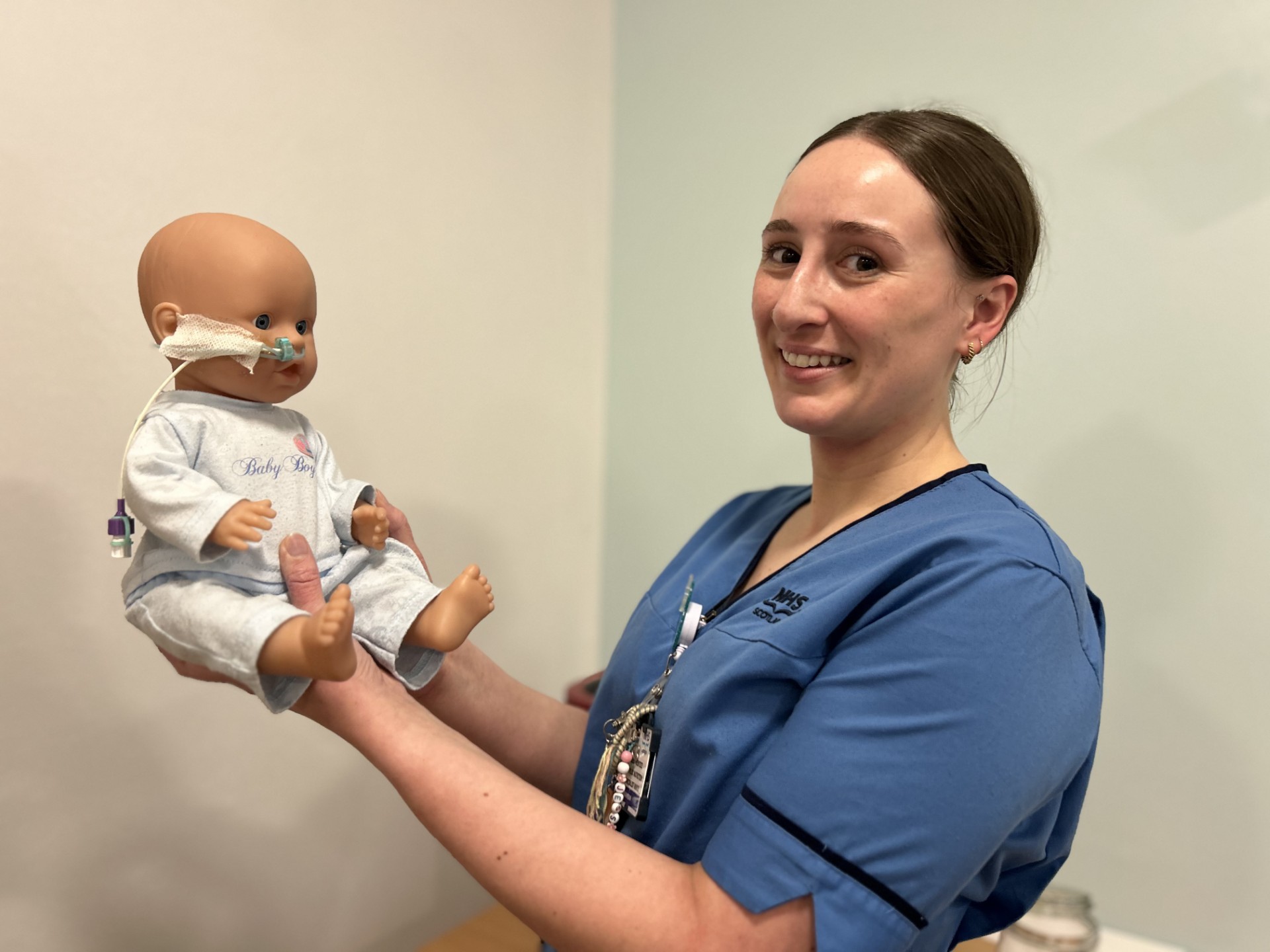
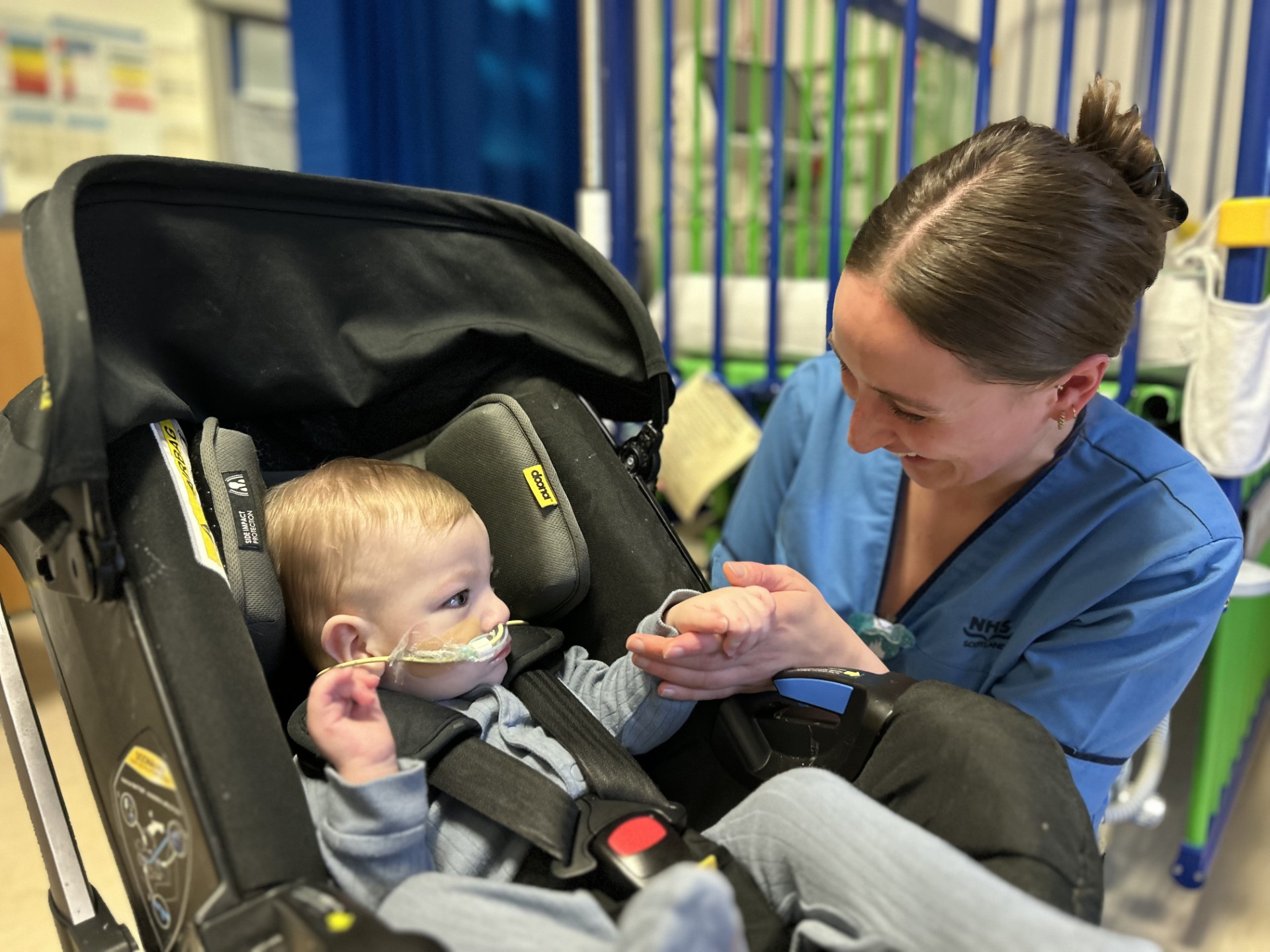
Jess explained: “We support a small number of very young children with nasogastric tubes at any one time – often while they are recovering from serious illness or surgery. These allow us to provide feed through a tube that goes through the nose and into their tummies. When I started this job three years ago we didn’t have a specific clinic for supporting these patients and I saw an opportunity to do things differently. The only people who could insert nasal bridles, to prevent babies from pulling their tubes out, were two consultants. So, they taught me and now I take referrals from dietitians and community nurses and run a specialist clinic once per month.
“Previously, families would come in two or three times a week – even daily – with displaced feeding tubes and now they just visit me once every three months when the bridle needs to be replaced. They’re left under the care of their normal medical teams and they just get in touch with me if they have any issues.”
A nasal bridle is a retention device that secures the feeding tube behind the nose.
Clinical nurse manager Caroline Reid commented: "Though we only ever have small numbers of children requiring nasal bridles at any one time, the impact of them having proactive specialist, accessible support has been profound. We have seen a significant reduction in unplanned hospital attendances for gastro patients under two years of age. The success of Jess’ clinic is testament to what happens when frontline staff are empowered to lead change, and it’s an example we’ve put forward as part of our application for Magnet designation.”
RACH is on track to become the first children’s hospital in the UK and the first hospital in Scotland to achieve Magnet designation for care excellence.
Caroline added: “If we’re successful, it will be a huge boost for attracting new staff and retaining talent in the North-east. The work Jess has done is a great example of a small idea with a big impact – and a role that is improving the lives of young patients and their carers across the North of Scotland.”
As well as delivering the clinic for nasogastric bridles, Jess supports consultant clinics, other nurse-led clinics and provides support to many children with complex feeding requirements by providing patient reviews and in-hospital training for colleagues. She is now training specialist nurses to be able to support patients with nasogastric bridles in Dundee and Inverness.
Jess added: “The other big part of my job is supporting our miracle babies who are born with 99% of their gut missing and wouldn’t have survived 10 years ago. They have severe gastrointestinal conditions like gastroschisis, where organs develop outside the body, and are alive today due to medical advancements. Intravenous nutrient therapy allows us to give children essential vitamins and minerals directly into their bloodstream, and with new medications and bowel lengthening surgery some young patients go on to be able to absorb lots of foods in a way that wouldn’t previously have been possible.
“I work across a big area supporting a small number of children with really complex needs. A lot of the kids I look after are non-verbal and I get to be their voice and support their parents too. It’s a really rewarding job and it’s great when you can make such a big difference to people’s lives.”
Find out more about Royal Aberdeen Children’s Hospital: Home - Welcome to RACH